

ICEMAGE GUIDE
What Is Clear Ice?
A practical guide to clear ice, large-format ice, whiskey, cocktails and what actually affects drink dilution.

THE SHORT ANSWER
Clear ice is about controlled freezing. Slower dilution is mostly about ice size.
Clear ice contains fewer visible bubbles and cloudy regions than typical freezer ice. It is often made by controlling the freezing direction so trapped gases and dissolved material move away from the part of the ice you keep.
One important distinction: clear ice does not automatically melt more slowly just because it is transparent. Large-format ice usually dilutes a drink more slowly than many smaller pieces because it has less exposed surface area relative to its volume.
CLARITY
Fewer visible bubbles and cloudy regions create a cleaner presentation.
FORMAT
Large cubes expose less surface area relative to their volume than many small pieces.
USE
Large clear ice is especially popular for whiskey, cocktails and home bars.
01 · THE BASICS
What exactly is clear ice?
Clear ice is ice that appears transparent or nearly transparent because it contains fewer visible air pockets and cloudy regions.
When water freezes, the crystal structure tends to exclude gases and dissolved material. If freezing happens in a controlled direction, those bubbles and dissolved substances can be pushed toward the last portion of water to freeze instead of becoming trapped throughout the cube.
02 · WHY ICE TURNS CLOUDY
Why does normal freezer ice have a white center?
Most household ice trays freeze water from the outside inward and often from several directions at once. As the ice front advances, trapped air and dissolved material are pushed into the remaining liquid. When the last part freezes, those bubbles and concentrated material can become locked into the middle.
Tiny bubbles scatter light and can make the center look white.
Minerals and other dissolved substances tend to concentrate in later-freezing areas.
Freezing from multiple directions makes it easier to trap bubbles inside the cube.
THE KEY DISTINCTION
Does clear ice really melt more slowly?
Not because it is clear. The biggest practical factors are the amount of ice, its size and shape, its starting temperature and the conditions in the drink.
A single large cube can have a lower surface-area-to-volume ratio than many small cubes. That is why large-format ice is often chosen when slower dilution is the goal.

03 · MELTING & DILUTION
Size matters more than clarity.
Think of two glasses containing a similar amount of ice. One uses a single large cube; the other uses many small cubes. The smaller pieces collectively expose more ice surface to the drink, so heat can transfer across more surface at once.
This is why a large cube or sphere is commonly used for spirits served over ice. It chills the drink while generally introducing dilution more gradually than a comparable mass of much smaller pieces.
The exact melting rate still changes with drink temperature, room temperature, glass shape, stirring and the starting temperature of the ice.
04 · SIDE BY SIDE
Clear ice vs regular ice
| What changes | Large clear ice | Typical household ice |
|---|---|---|
| Appearance | Transparent or nearly transparent | Often cloudy through the center |
| Typical format | Often larger cubes or spheres | Often smaller tray or machine-made pieces |
| Dilution | Large formats can dilute more gradually | Many small pieces expose more total surface area |
| Best known for | Whiskey, cocktails, home-bar presentation | Water, soda, iced coffee and everyday chilling |
| How it is made | Controlled freezing, insulated molds or dedicated equipment | Standard trays or everyday ice makers |
05 · IN THE GLASS
What ice is best for whiskey and cocktails?
For whiskey
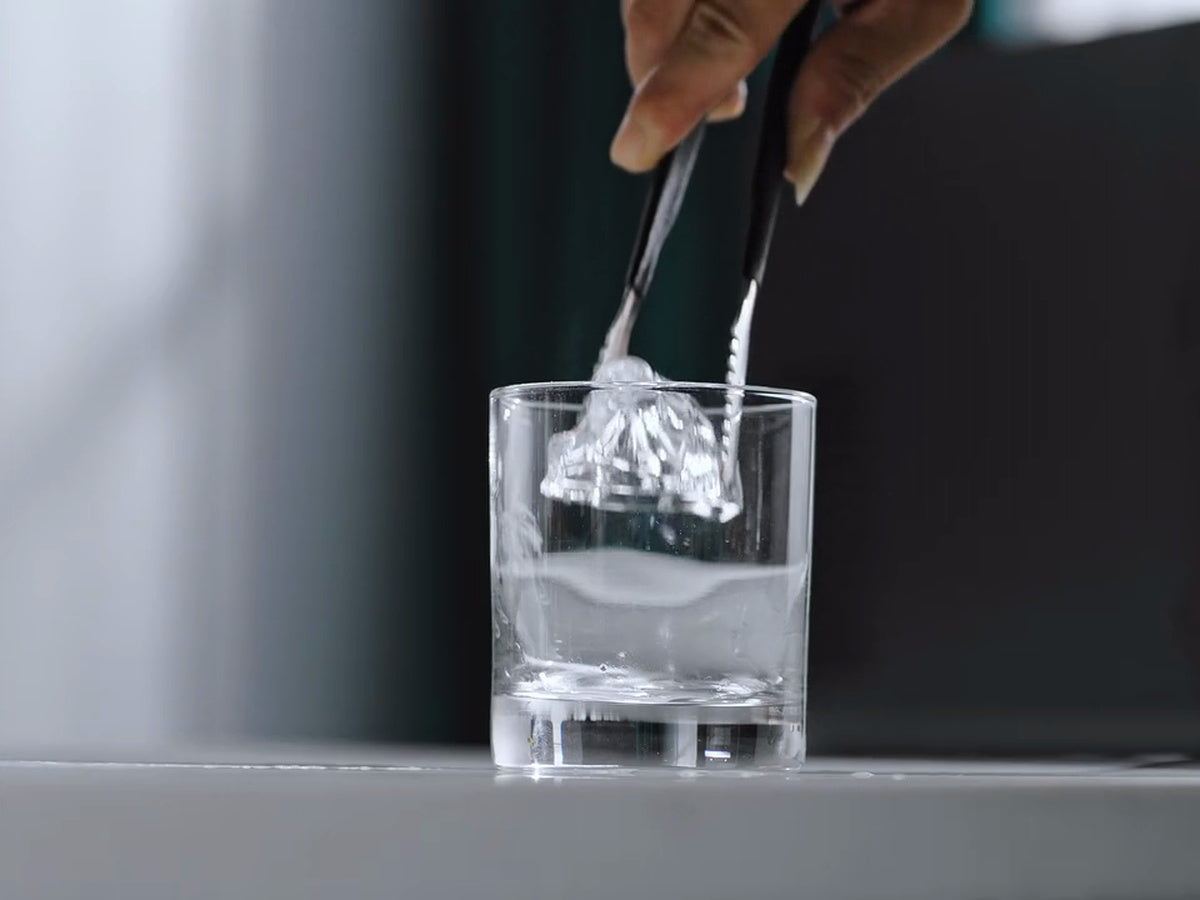
There is no single “correct” way to drink whiskey. Neat whiskey uses no ice. If you prefer it chilled with measured dilution, one large cube is a common choice.
For spirit-forward cocktails
Drinks such as an Old Fashioned are often served over one large cube because they are intended to be sipped rather than rapidly diluted.
For highballs & shaken drinks
Different drinks call for different ice. Tall ice can suit a highball, while smaller cubes are useful during shaking because more contact area helps chill quickly.
06 · HOW IT IS MADE
How do you make clear ice at home?
The central idea behind many clear-ice methods is directional freezing: encourage the water to freeze progressively from one direction so air bubbles and dissolved material are pushed toward the last portion to freeze.
Control the freezing direction
Insulation or purpose-built equipment helps determine where the freezing front begins and finishes.
Move cloudiness away
Bubbles and dissolved material become concentrated toward the final freezing zone.
Keep or form the clear section
Manual systems may require separating the clear portion; dedicated appliances aim to make the process more repeatable.
07 · CHOOSING A METHOD
Clear ice mold vs clear ice maker
Both can have a place at home. The better choice depends on how often you want clear ice and how much setup you are comfortable managing.
Insulated clear-ice mold
- Simple way to start
- Good for occasional batches
- Requires freezer space and manual handling
- Output depends on mold and process
Countertop clear-ice appliance
- Purpose-built for repeatable production
- Better suited to frequent home-bar use
- Uses dedicated countertop space
- Convenience and output vary by model
A DEDICATED COUNTERTOP OPTION
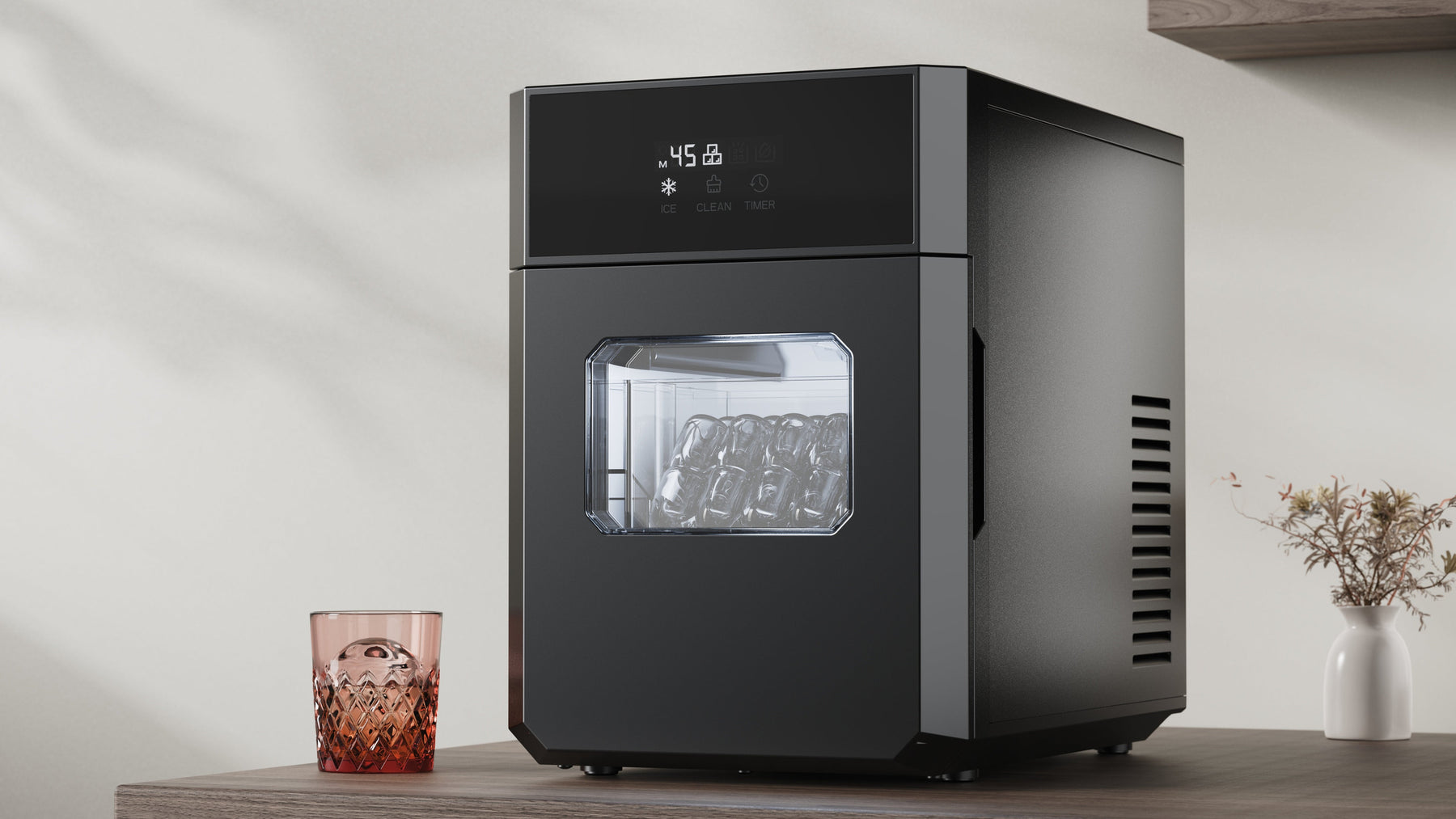
Meet ICEMAGE CrystalMax.
CrystalMax is designed around large crystal-clear square ice for whiskey, cocktails and elevated drinks at home. It is the ICEMAGE option for people who want clear ice to be part of their regular home-bar routine rather than an occasional freezer project.
EXPLORE CRYSTALMAXCLEAR ICE FAQ
Questions, answered.
Short answers to common questions about clear ice at home.
What is clear ice?
Clear ice is transparent or nearly transparent ice with fewer visible air bubbles and cloudy regions. It is commonly made by controlling how water freezes so trapped gases and dissolved material are pushed toward the last part of the water to freeze.
Why does regular ice turn cloudy?
In a typical home freezer, water often freezes from several directions. Air bubbles and dissolved minerals can become trapped inside the forming ice, creating the familiar white or cloudy center.
Does clear ice melt more slowly than cloudy ice?
Clarity by itself does not make ice melt more slowly. Size, shape, starting temperature and the surrounding drink matter more. Large-format clear cubes often dilute drinks more slowly than many smaller cubes because they expose less surface area relative to their volume.
Is clear ice better for whiskey?
It depends on how you like to drink whiskey. Neat whiskey needs no ice. If you want a chilled pour with more controlled dilution, one large cube is a popular choice because it adds less exposed ice surface than a glass filled with many small cubes.
Can I make clear ice at home?
Yes. Common approaches include directional-freezing methods, insulated clear-ice molds and dedicated clear-ice appliances. The trade-off is usually between hands-on setup, consistency, output and countertop convenience.
What is directional freezing?
Directional freezing encourages water to freeze progressively from one direction. As the freezing front moves, bubbles and dissolved material are concentrated toward the last portion to freeze, leaving a clearer section that can be separated or shaped.
Do I need to boil water to make clear ice?
Boiling water can reduce some dissolved gases, but it does not guarantee clear ice. The way water freezes is usually more important than boiling alone, especially when the goal is a consistently clear large cube.
Is a clear ice maker worth it?
A dedicated clear ice maker can make sense if you regularly serve whiskey, cocktails or home-bar drinks and value repeatability and convenience. An insulated mold can be a simpler choice if you only need clear ice occasionally.