

ICEMAGE GUIDE
Clear Ice vs Regular Ice
Both chill a drink. The biggest differences are how the ice looks, how it is usually made and the formats in which it is commonly served.

THE SHORT ANSWER
The clearest difference is appearance. The biggest dilution difference usually comes from size.
Clear ice contains fewer visible bubbles and cloudy regions because of how the water freezes. Regular household ice often traps more bubbles and dissolved material as it freezes.
But clear does not automatically mean slow-melting. A large cube often dilutes more gradually than many small pieces because of its lower surface-area-to-volume ratio. That relationship comes from format, not transparency alone.
APPEARANCE
Clear ice emphasizes transparency and presentation; everyday ice is often cloudy.
DILUTION
Size and exposed surface area matter more than whether the cube looks clear.
USE
Regular ice excels at everyday chilling; large clear ice fits slower-sipping home-bar drinks.
01 · SIDE BY SIDE
Clear ice and regular ice solve different jobs.
Neither style is universally better. The useful comparison is what changes in the glass and what matters for the drink you are making.
| What changes | Large clear ice | Typical regular household ice |
|---|---|---|
| Appearance | Transparent or nearly transparent | Often cloudy through the center |
| Freezing process | Often uses controlled or directional freezing | Usually freezes from several directions in trays or everyday machines |
| Typical format | Commonly large cubes or spheres | Commonly smaller cubes or bullet-shaped pieces |
| Dilution behavior | Large formats can dilute more gradually | Many smaller pieces expose more total surface area and can exchange heat faster |
| Convenience | May require a special mold, process or dedicated appliance | Easy to make in standard trays or countertop ice makers |
| Common use | Whiskey, spirit-forward cocktails and home-bar presentation | Water, soda, iced coffee, shaking cocktails and everyday chilling |
These are common patterns, not rules. Clear ice can be small, regular ice can be large, and actual melting depends on more than appearance.
02 · WHY IT LOOKS DIFFERENT
Why is clear ice transparent while regular ice turns cloudy?
When water freezes, the growing ice structure tends to push air bubbles and dissolved material away from the freezing front. In a normal tray, freezing can progress from several directions and trap those bubbles toward the center.
Clear-ice methods try to control that process so cloudiness is moved toward a final freezing zone instead of being distributed through the cube.
Controlled freezing gives bubbles and dissolved material somewhere to move as the ice forms.
Tiny trapped bubbles scatter light and create the familiar white or cloudy appearance.
Water composition can influence the result, but freezing behavior is a major part of visible clarity.
THE MOST COMMON MYTH
Clear does not automatically mean slow-melting.
Transparency and melting are related to different things. Clarity is mainly about bubbles, dissolved material and the freezing process. Melting is strongly influenced by ice size, shape, temperature and the conditions around it.
A large clear cube can be a slow-dilution choice, but the advantage comes mainly from its large format rather than the fact that you can see through it.

03 · MELTING & DILUTION
What actually controls how quickly ice dilutes a drink?
The useful concept is exposed surface area. If a similar amount of ice is divided into many small pieces, more ice surface is in contact with the drink at the same time. A single larger piece usually exposes less surface relative to its volume.
Larger formats generally expose less surface area relative to their volume than many smaller pieces.
Warmer drinks, glasses and rooms transfer heat into the ice faster than colder conditions do.
Stirring, shaking and flowing liquid increase contact and heat transfer around the ice.
No ice format has one fixed melting rate. Drink temperature, glass shape, ice temperature and serving conditions all change the result.
04 · EVERYDAY ICE
Regular ice is not the “wrong” ice.
For many drinks, regular ice is exactly what you want. It is easy to produce, chills quickly and works across more everyday situations than a large presentation cube.
Everyday beverages
Water, soda, iced tea and iced coffee usually benefit more from convenient, plentiful ice than from a single showcase cube.
Shaking cocktails
Smaller cubes provide more contact area inside a shaker, helping chill and dilute a cocktail during the shake.
Fast, casual service
When you need multiple glasses or frequent refills, standard ice is often the simpler and more practical choice.
05 · WHEN CLEAR ICE EARNS ITS PLACE
Choose the ice for the moment.
Clear ice becomes most valuable when the ice is visible, the drink is meant to be sipped and presentation is part of the experience.
Convenience and quick chilling lead.
- You are serving everyday cold drinks
- You need a lot of ice quickly
- You are shaking a cocktail
- The appearance of the cube is not important
The ice is part of the presentation.
- You serve whiskey or spirit-forward cocktails
- You want a cleaner home-bar look
- You prefer a larger format for more gradual dilution
- You use clear ice often enough to value repeatability
06 · WHISKEY & COCKTAILS
What ice should actually go in the glass?
Whiskey
Neat whiskey needs no ice. If you prefer it chilled with gradual dilution, one large cube is a common serving choice.
Old Fashioned & similar drinks
One large cube suits drinks that are served over ice and sipped slowly, especially when presentation matters.
Shaken & tall drinks
Smaller ice is useful while shaking, while tall cubes can suit highballs where shape and glass fit matter.
A DEDICATED COUNTERTOP OPTION
Want large clear ice to be part of the routine?
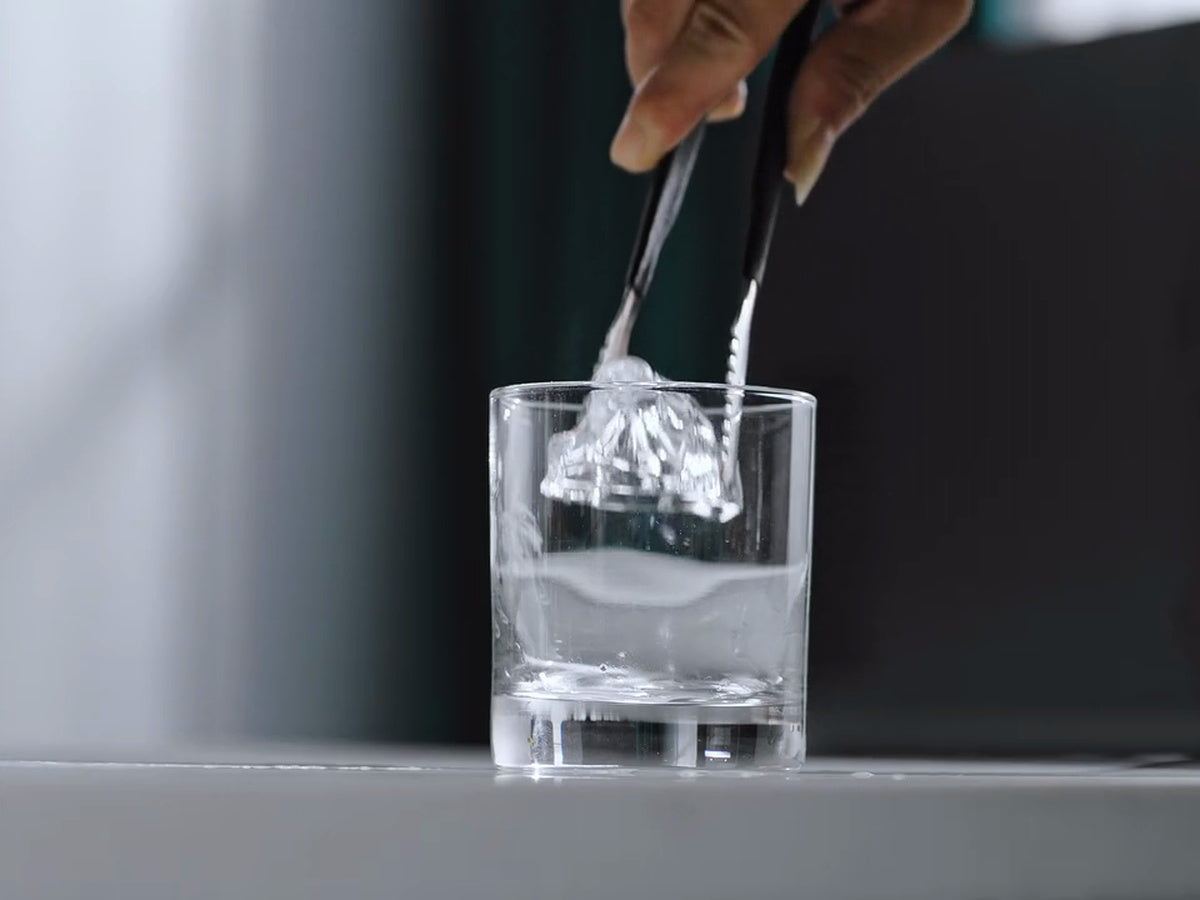
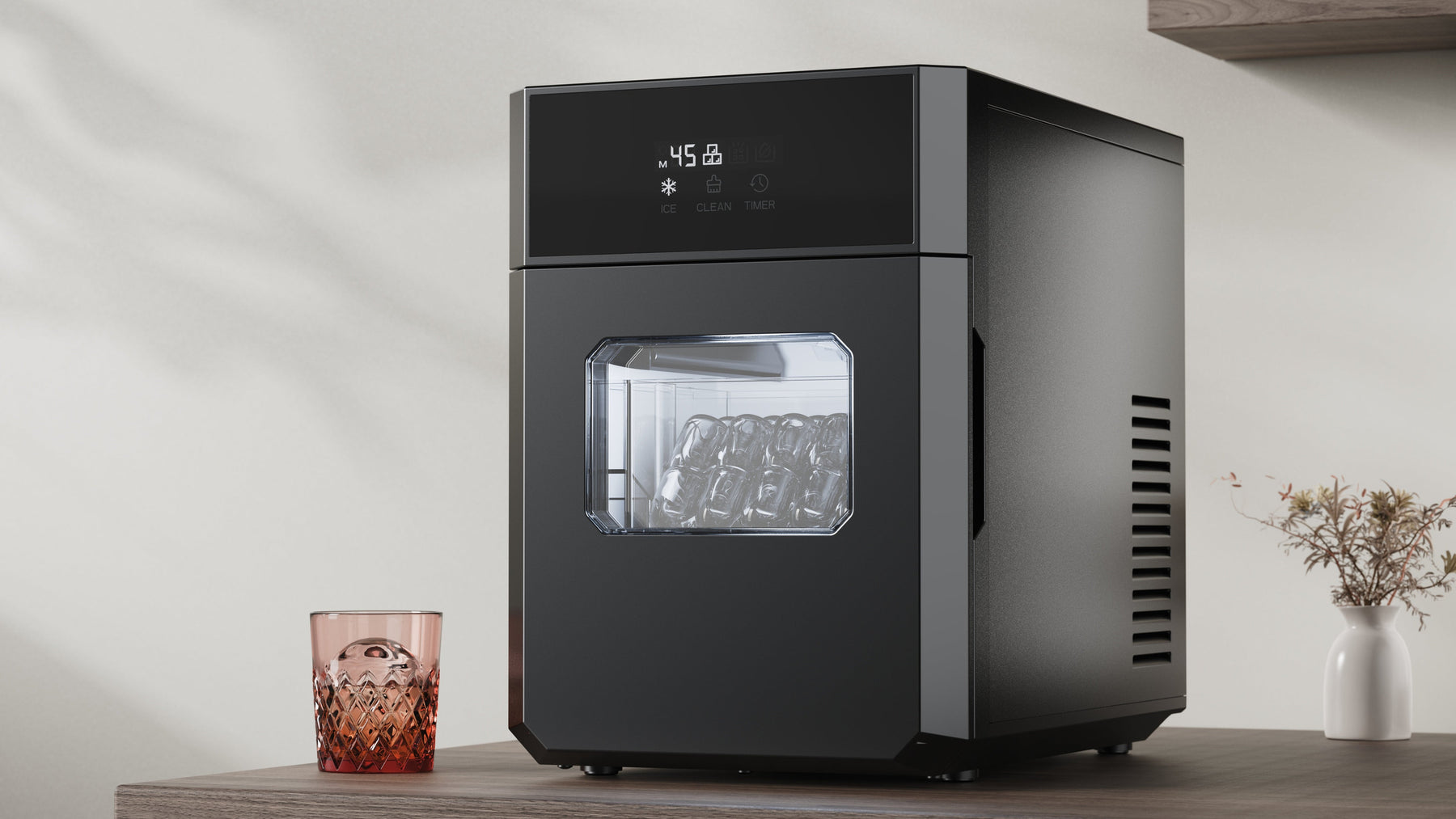
ICEMAGE CrystalMax is designed around large crystal-clear square ice for whiskey, cocktails and elevated drinks at home. It is the dedicated ICEMAGE option for people who want repeatable clear ice without relying only on a manual freezer method.
EXPLORE CRYSTALMAXCLEAR VS REGULAR ICE FAQ
Questions, answered.
Short answers to the differences people most often ask about.
Is clear ice better than regular ice?
Not in every situation. Clear ice is valued for presentation and is often used in larger formats for whiskey, cocktails and home-bar drinks. Regular ice is practical for everyday chilling, shaking cocktails and high-volume use. The better choice depends on the drink and the experience you want.
Does clear ice melt more slowly than regular ice?
Not simply because it is clear. Ice size, shape, starting temperature and the conditions in the drink matter more. A large clear cube can dilute more gradually than many smaller pieces because it exposes less surface area relative to its volume.
Why is regular ice often cloudy?
Typical household ice often freezes from several directions. As the freezing front moves, air bubbles and dissolved material can become trapped toward the center, creating white or cloudy areas.
Does cloudy ice taste different from clear ice?
Cloudiness by itself does not determine flavor. Water quality, freezer odors, storage time and cleanliness can affect how ice tastes. Clear-looking ice can still pick up unwanted flavors if it is stored poorly.
Is clear ice safer or purer than cloudy ice?
No. Visual clarity is not a safety or purity test. Use potable water and clean food-contact equipment regardless of whether the finished ice is clear or cloudy.
What ice is best for whiskey?
Whiskey can be enjoyed neat with no ice at all. If you prefer a chilled pour with more gradual dilution, one large cube is a common choice because it presents less exposed surface area than a glass filled with many small pieces.
What ice is best for cocktails?
It depends on the cocktail. Large cubes suit many spirit-forward drinks served over ice, while smaller cubes are useful for shaking because their greater contact area helps chill quickly. Tall ice can also work well in highballs.
Can I make clear ice at home?
Yes. Common methods include directional freezing in an insulated container, purpose-built clear-ice molds and dedicated clear-ice appliances. The main trade-offs are freezer space, manual handling, consistency and convenience.